

When the days grow shorter, morning fog blankets the meadows, and the forest floor becomes properly moist again, one of the most wonderful culinary times of the year begins for me: mushroom season! Porcini, chanterelles, russula, parasol mushrooms, and many other wild mushrooms offer flavors that are virtually impossible to replicate with other ingredients.
And mushrooms can be used for so much more than just the classic sautéed mushrooms with onions and bacon. Anyone familiar with Chopstick BBQ knows, of course, that I like to do things a little differently. Wild mushrooms meet Asian flavors, end up in the wok or smoker, are grilled, pickled, or even turned into jerky.

In this post, you’ll find not only my favorite fall mushroom recipes, but also some basic tips on how to forage for, clean, store, and prepare fresh mushrooms.
Table of Contents
- Mushroom Hunting in the Fall
- How to Clean Mushrooms Properly
- Mushrooms from the Wok – Fall Cuisine Meets Asia
- Porcini Mushrooms with a Twist
- Grilling and Smoking Mushrooms
- Mushrooms in soups, salads, and dumplings
- Preserving Mushrooms – Drying, Freezing, and Pickling
- Mushroom Jerky – Mushrooms as a Snack
- The Essence of Fall: Mushroom Bread with Pumpkin
- Can you reheat mushroom dishes?
- Mushroom recipes don’t always have to be traditional
Mushroom Hunting in the Fall
The peak season for many native wild mushrooms is in late summer and fall. However, how good a mushroom season actually turns out depends heavily on temperature and precipitation. After wet and still relatively mild days, a walk through the woods is often especially worthwhile.
Among the most popular edible mushrooms are porcini, chanterelles, and various boletes. But milk caps, parasol mushrooms, and stick mushrooms can also be excellent edible mushrooms.
There is one rule with no exceptions: Only items that have been identified beyond a doubt go into the basket.
Mushroom apps and identification guides can help you identify mushrooms, but they are no substitute for reliable species knowledge. Especially when dealing with species that have dangerous look-alikes, you should consult a mushroom advisory service or a mushroom expert if in doubt.

A good example is the stick mushroom. They are excellent edible mushrooms, but can be mistaken for the poisonous death cap. If you’re not absolutely sure, leave the mushroom where it is.
It’s best to collect mushrooms in a breathable basket. Plastic bags aren’t suitable because heat and moisture can build up inside them. You can remove any coarse dirt while you’re still in the woods—that saves you work later in the kitchen.
How to Clean Mushrooms Properly
Once you’re back from the woods, the less enjoyable part of mushroom hunting usually awaits: cleaning them.
Mushrooms should be prepared as soon as possible. Soil, pine needles, and other debris can usually be removed with a mushroom brush, a paintbrush, or a slightly damp cloth. Heavily soiled or damaged areas should be cut away with a knife.
If necessary, you can also rinse them briefly under running water. However, you should avoid soaking them in water for too long. Delicate mushrooms, in particular, can absorb water and lose their flavor and texture as a result.

Cleaning chanterelles can definitely require some patience. Soil tends to accumulate between the gills in particular. Afterward, the mushrooms should be prepared as soon as possible.
And then it’s finally time to get cooking—whether on the stove, in a wok, on the grill, or in the smoker, of course.
Mushrooms from the Wok – Fall Cuisine Meets Asia
To me, mushrooms and the wok are a perfect combination. The high heat quickly brings out roasted flavors, while the mushrooms still retain their crunch.
A great example of this is my wok-fried chanterelles with garlic-butter rice noodles. Chanterelles have a rich, distinctive flavor and don’t really need much else to taste truly delicious. Combined with garlic, butter, and rice noodles, they make for a simple mushroom dish with an Asian twist.
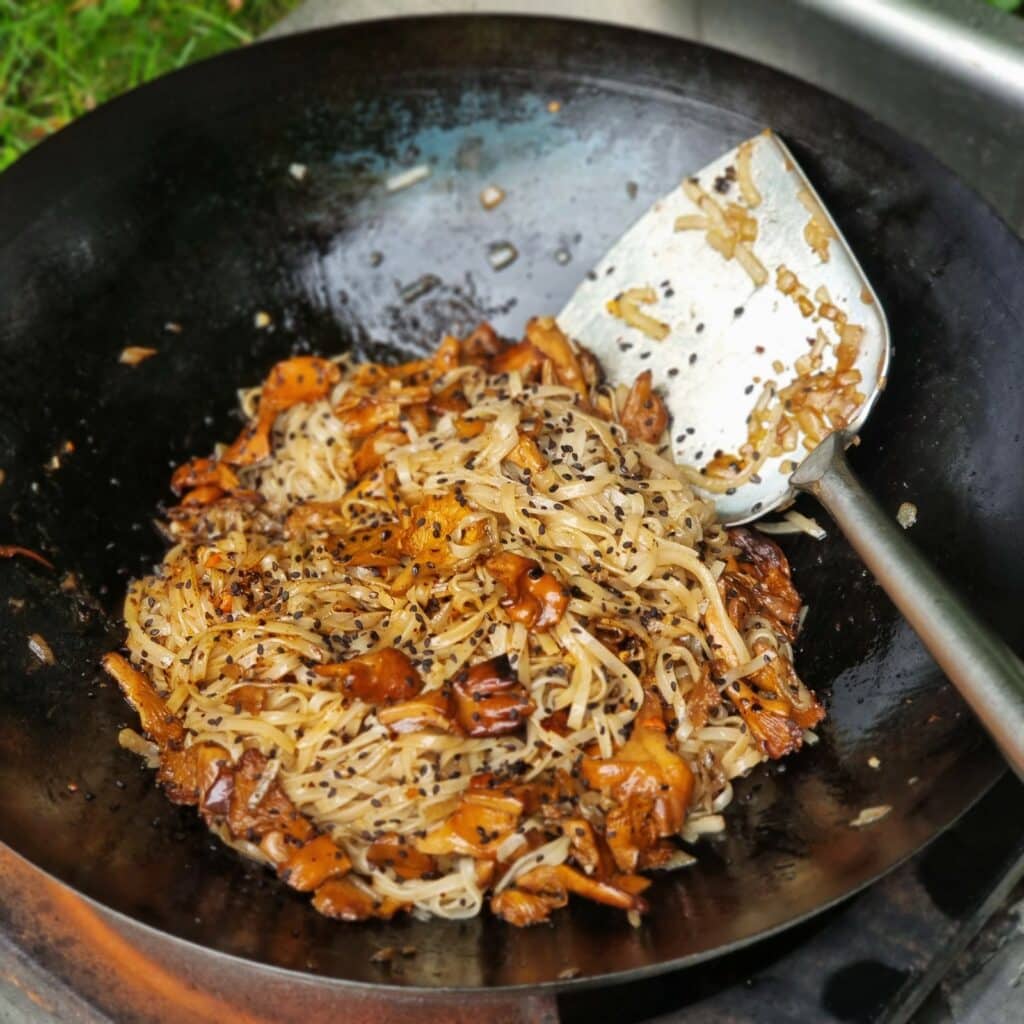
The Thai-style chanterelles. These are exactly the kinds of combinations I particularly like: a classic local wild mushroom, but prepared in a way that’s completely different from the usual pan-fried chanterelles.
For me, Brussels sprouts are definitely a fall favorite, too. So why not combine the two? In my Brussels Sprouts and Mushroom Stir-Fry , Brussels sprouts and mushrooms are combined with ginger, garlic, soy sauce, oyster sauce, and sesame oil. Depending on what’s available, you can use, for example, king oyster mushrooms, porcini mushrooms, or shiitake mushrooms.
Porcini Mushrooms with a Twist
For many mushroom hunters, the porcini mushroom is one of the absolute highlights of the season. Its rich, slightly nutty flavor makes it an excellent edible mushroom.
Of course, you can simply sauté porcini mushrooms in butter. But you can also do something completely different with them.
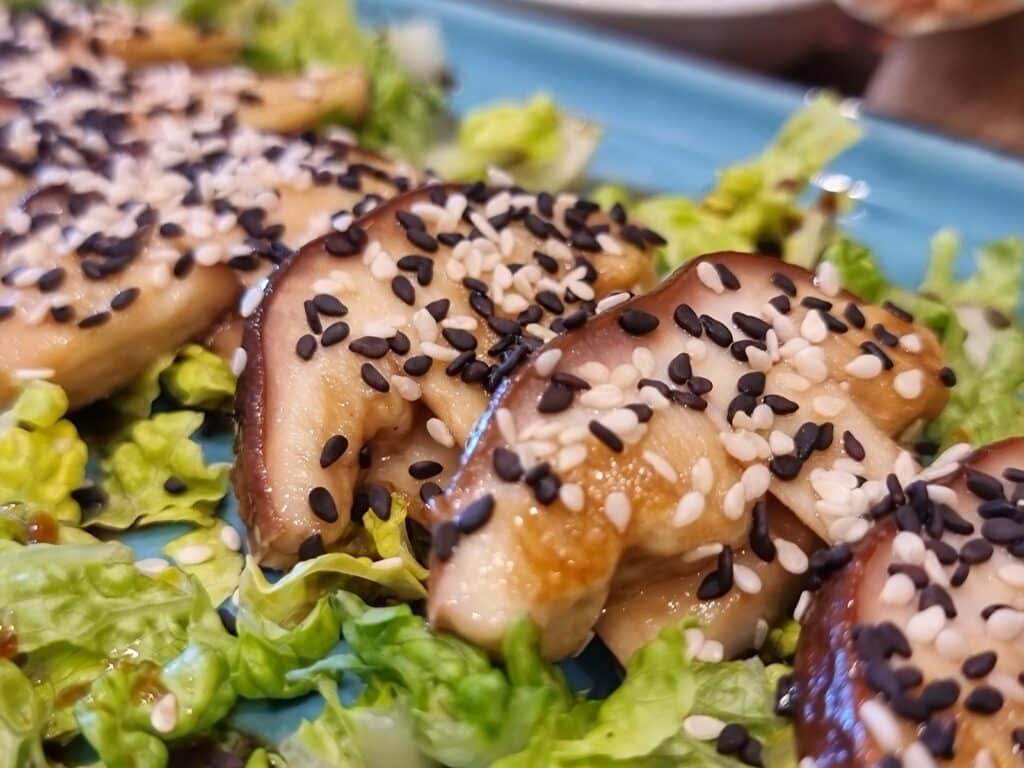
My Porcini Tataki with Teriyaki and a Sesame Coating combines fresh porcini mushrooms with Japanese flavors. The mushroom slices are seared briefly over high heat, glazed with teriyaki sauce, and then coated with a mixture of white and black sesame seeds.

Also in the lentil-mushroom curry with Anicia lentils and lychees . Here, the earthy mushroom flavors meet nutty lentils, coconut milk, red curry paste, ginger, chili, and the sweetness of the lychees. Outside of porcini season, dried or previously frozen mushrooms can also be used for such dishes.
Grilling and Smoking Mushrooms
Of course, mushrooms are also a great addition to the grill. Varieties with a firm texture work especially well because they don’t fall apart right away when grilled and can develop rich, toasty flavors.
A prime example of this is the king oyster mushroom. Its firm flesh can withstand high temperatures and bold roasted flavors. My grilled king oyster mushrooms are therefore an easy way to serve mushrooms as an appetizer or side dish straight from the grill.

The Mushroom Volcano with parasol mushrooms, ground beef, and cheddar . Large parasol mushroom caps are combined with ground meat and cheddar, then turned into a hearty BBQ dish. This is certainly no longer a subtle mushroom side dish, but rather something for anyone who likes their food hearty.
The combination of meat, smoke, and wild mushrooms also works wonderfully with my smoked Chinese duck legs with fresh king oyster mushrooms. The Asian-style marinated duck legs come out of the pellet smoker, while the porcini mushrooms are sautéed with onions in clarified butter. A truly wonderful combination for a fall evening.
Mushrooms in soups, salads, and dumplings
Mushroom dishes don’t have to be heavy and hearty just because it’s fall. They also add plenty of flavor to soups, salads, and dumplings.
With my Chinese sweet-and-sour-spicy soup with stick mushrooms , local wild mushrooms take on a role for which shiitake or other mushrooms are often used in Asian cuisine. However, because of the potential for confusion with stick mushrooms, it’s especially important here to use only mushrooms that have been positively identified.

It gets even easier with the Thai wild mushroom salad with king oyster mushrooms. It’s a wonderful example of how mushrooms don’t necessarily have to be swimming in a creamy sauce—they also pair perfectly with the fresh, spicy, and tangy flavors of Thai cuisine.

Another variation is my dumplings with chili butter and velvet foot mushrooms. Mushrooms, dumplings, and spicy chili butter—sometimes that’s all you need.
Preserving Mushrooms – Drying, Freezing, and Pickling
Anyone who picks mushrooms knows the problem: Sometimes you come home with an almost empty basket—and on other days, you suddenly find a whole load of mushrooms in the kitchen.
Fresh mushrooms should be used as soon as possible. They can be stored in the refrigerator in a cool, well-ventilated place for a short time. A paper bag or a dry cloth is better suited for this than an airtight plastic bag.
For larger quantities, there are various preservation methods. Many mushrooms can be dried. Porcini mushrooms, in particular, develop a very concentrated flavor when dried. Once dried, they can later be used in soups, sauces, risotto, curries, or even homemade mushroom powder.
You can also freeze them. Depending on the type of mushroom, clean them first and, if necessary, blanch or sauté them briefly. This way, you can use part of your fall mushroom harvest even outside of the actual season.

Another option is pickling. My Japanese-style pickled oyster mushrooms—Kinoko Sunomono are first briefly sautéed and then marinated in a mixture of rice vinegar, soy sauce, mirin, dashi, lime, and sesame oil, among other ingredients. This gives a local wild mushroom a distinctly Japanese flavor.
Mushroom Jerky – Mushrooms as a Snack
It gets even more unusual with my Mushroom Jerky—a snack from the forest.
Here, mushrooms are marinated and then dried at a low temperature. The result is a savory mushroom snack with an intense flavor and a texture quite different from that of freshly sautéed mushrooms. In addition to porcini mushrooms, oyster mushrooms, king oyster mushrooms, and shiitake mushrooms are also good choices.
So if you’re looking for an alternative to the tenth mushroom stir-fry, you should definitely give this version a try.

The Essence of Fall: Mushroom Bread with Pumpkin
To me, mushrooms and pumpkin are among the ingredients that best represent fall in the kitchen. That’s why I included both in my mushroom bread with pumpkin made in a Dutch oven .

The bread is made with a variety of wild mushrooms—such as porcini, chestnut boletes, butter mushrooms, and birch mushrooms—as well as butternut squash. The whole thing is baked in a cast-iron pot or Dutch oven. Add some grilled items and maybe a side of sautéed mushrooms—it doesn’t get much more fall-like than this.
Can you reheat mushroom dishes?
The old saying that mushrooms should never be reheated has proven surprisingly persistent. Today, what matters most is handling the finished dish properly.
Leftovers should be cooled as quickly as possible after a meal and stored in the refrigerator. The next day, they should be reheated thoroughly until completely hot. Leaving mushroom dishes out at room temperature for hours, on the other hand, is not a good idea.
In any case, the best rule is: Use and enjoy mushrooms as fresh as possible.
Mushroom recipes don’t always have to be traditional
A pan of mushrooms with butter, onions, and parsley can taste great—but the world of mushroom recipes is much bigger than that.
I find the combination of local wild mushrooms with Asian ingredients particularly exciting. Recipes featuring wild mushrooms—such as porcini mushrooms with teriyaki, Japanese-style pickled chanterelles, chanterelles stir-fried in a wok, or wild mushrooms with Thai flavors—show just how versatile these ingredients really are.
And if you come across porcini mushrooms, chanterelles, russula, or parasol mushrooms on your next walk in the woods, at least now you’ll know what you could make with them.
There’s only one thing we won’t take any chances on: We serve only mushrooms that have been unequivocally identified as edible.
But then nothing will stand in the way of a truly great fall mushroom season.


